



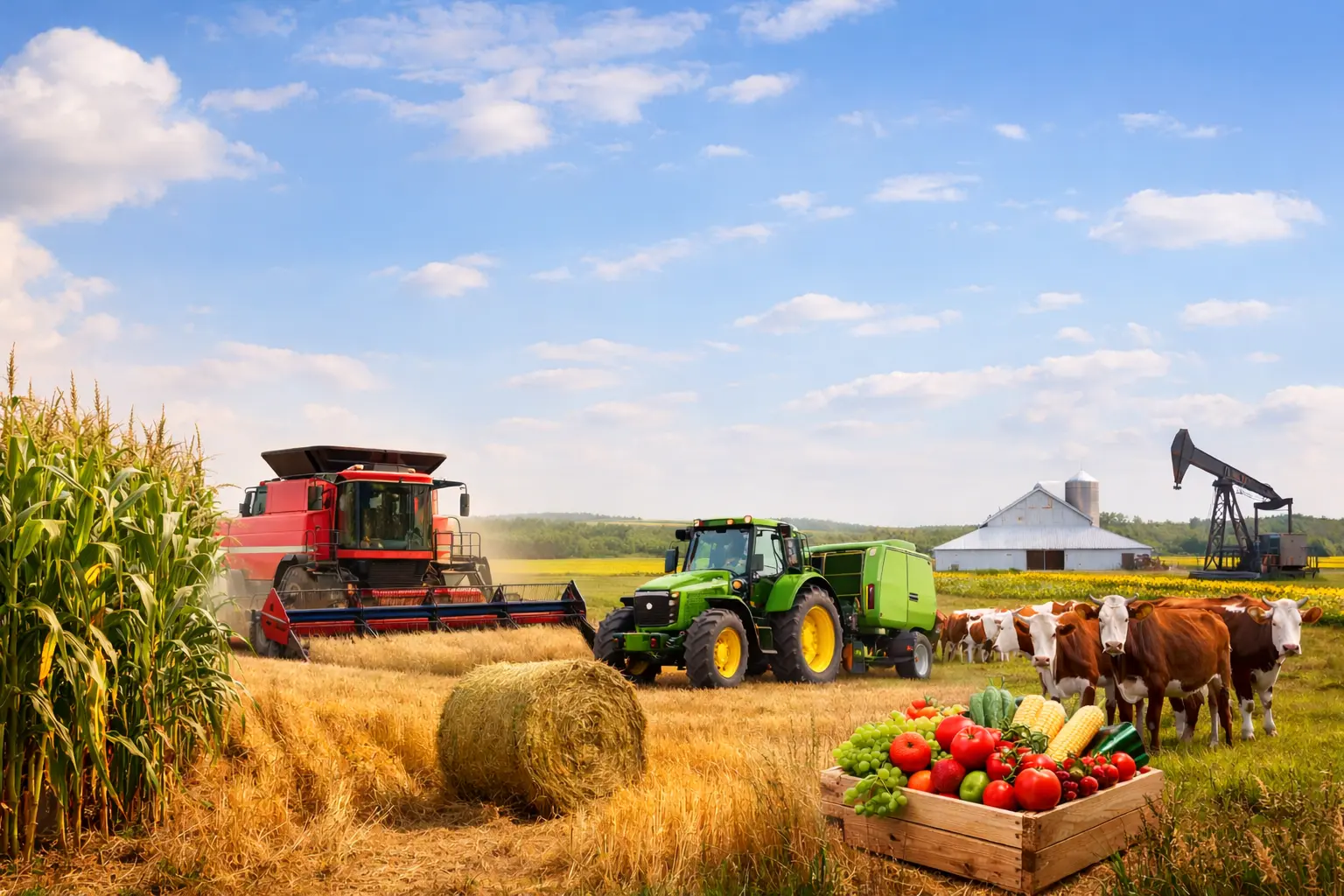
The United States is one of the world’s largest agricultural producers, supplying food, fiber, and raw materials not only for domestic consumption but also for global markets. From vast grain belts to fruit-rich valleys and livestock hubs, agriculture in the US varies significantly by region. Each state contributes uniquely based on climate, soil quality, water availability, and technological adoption.
Understanding the top agricultural producing states helps agribusiness professionals, farmers, exporters, and equipment suppliers better grasp where large-scale farming activity is concentrated and how modern farming systems operate. Below are the top five agricultural producing states in the US, based on overall agricultural output, crop diversity, and economic value.
1. California – The Agricultural Powerhouse
California consistently ranks as the number one agricultural producing state in the US in terms of total value. Despite occupying less farmland than some Midwestern states, California’s productivity is unmatched due to advanced irrigation systems, favorable climate, and high-value crops.
Key Agricultural Products:
-
Fruits and vegetables (almonds, grapes, strawberries, lettuce)
-
Nuts (almonds, pistachios, walnuts)
-
Dairy products
-
Wine grapes
California produces more than one-third of the nation’s vegetables and nearly two-thirds of its fruits and nuts. The Central Valley, in particular, is one of the most productive agricultural regions in the world.
To manage large-scale operations, farms here rely heavily on mechanized solutions, automation, and precision farming technologies, driving strong demand for modern harvesting and processing equipment.
2. Iowa – The Heart of America’s Corn Belt
Iowa is widely known as the backbone of US grain production. The state’s fertile soil and flat terrain make it ideal for large-scale row-crop farming.
Key Agricultural Products:
-
Corn
-
Soybeans
-
Pork
-
Eggs
Iowa often leads the nation in corn and soybean production, supplying both domestic markets and international exports. These crops are essential for food products, animal feed, and biofuel industries.
Because of the scale of operations, Iowa farms depend heavily on durable machinery, efficient harvesting systems, and reliable spare parts. The growth of such large farms has also strengthened ties with global suppliers, including agricultural machinery manufacturers that support high-capacity equipment needs.
3. Texas – Agriculture at Massive Scale
Texas stands out not only for its size but also for the diversity of its agricultural output. With millions of acres of farmland and ranchland, Texas plays a major role in US agriculture.
Key Agricultural Products:
-
Cattle and beef
-
Cotton
-
Hay
-
Sorghum
-
Wheat
Texas leads the nation in cattle production and cotton acreage. Its agricultural landscape ranges from irrigated crop farms to expansive ranches, requiring a wide variety of farming equipment.
Due to its scale, Texas agriculture depends on robust machines capable of handling long operating hours and harsh conditions. This environment also creates opportunities for international equipment suppliers, including brands such as L.K Agro Engg Works, known for engineering solutions aligned with demanding agricultural operations.
4. Nebraska – Grain, Livestock, and Irrigation Excellence
Nebraska is another major agricultural contributor, especially known for its integrated crop-livestock systems. The state benefits from extensive irrigation supported by the Ogallala Aquifer, allowing stable yields even during dry seasons.
Key Agricultural Products:
-
Corn
-
Beef
-
Soybeans
-
Ethanol
Nebraska is a top producer of both corn and beef, making it central to the US food supply chain. Many farms operate on large acreages and follow highly mechanized practices.
Advanced irrigation systems, combines, and crop-handling equipment are widely used, highlighting the importance of reliable manufacturing and engineering support across the agricultural value chain.
5. Illinois – High Yields and Advanced Farming Practices
Illinois completes the top five with its strong performance in grain production. Its rich soil and adoption of modern farming practices contribute to consistently high yields.
Key Agricultural Products:
-
Corn
-
Soybeans
-
Wheat
-
Livestock feed crops
Illinois farmers are early adopters of precision agriculture, data-driven farming, and efficient harvesting technologies. This approach improves productivity while reducing operational costs.
The state’s agricultural success is closely tied to innovation, making it a strong market for advanced farm equipment, replacement parts, and support services from both domestic and international agricultural machinery manufacturers.
Why These States Lead US Agriculture
The dominance of these five states is not accidental. Several key factors contribute to their success:
-
Favorable climate and soil conditions
-
Large areas of cultivable land
-
Access to irrigation and water resources
-
Adoption of modern farming technology
-
Strong infrastructure and export connectivity
As farming continues to evolve, efficiency, durability, and performance of equipment will remain critical. Farmers increasingly look for dependable machinery and components that can withstand heavy workloads while maintaining productivity.
Conclusion
California, Iowa, Texas, Nebraska, and Illinois form the backbone of US agriculture. Each state contributes differently—whether through high-value specialty crops, large-scale grain production, or livestock farming—but together they shape the country’s agricultural strength.
As these states continue to modernize, the role of engineering innovation, mechanization, and global collaboration will grow. For farmers, suppliers, and agribusiness professionals, understanding these leading agricultural regions offers valuable insight into where opportunity, scale, and growth truly lie.