



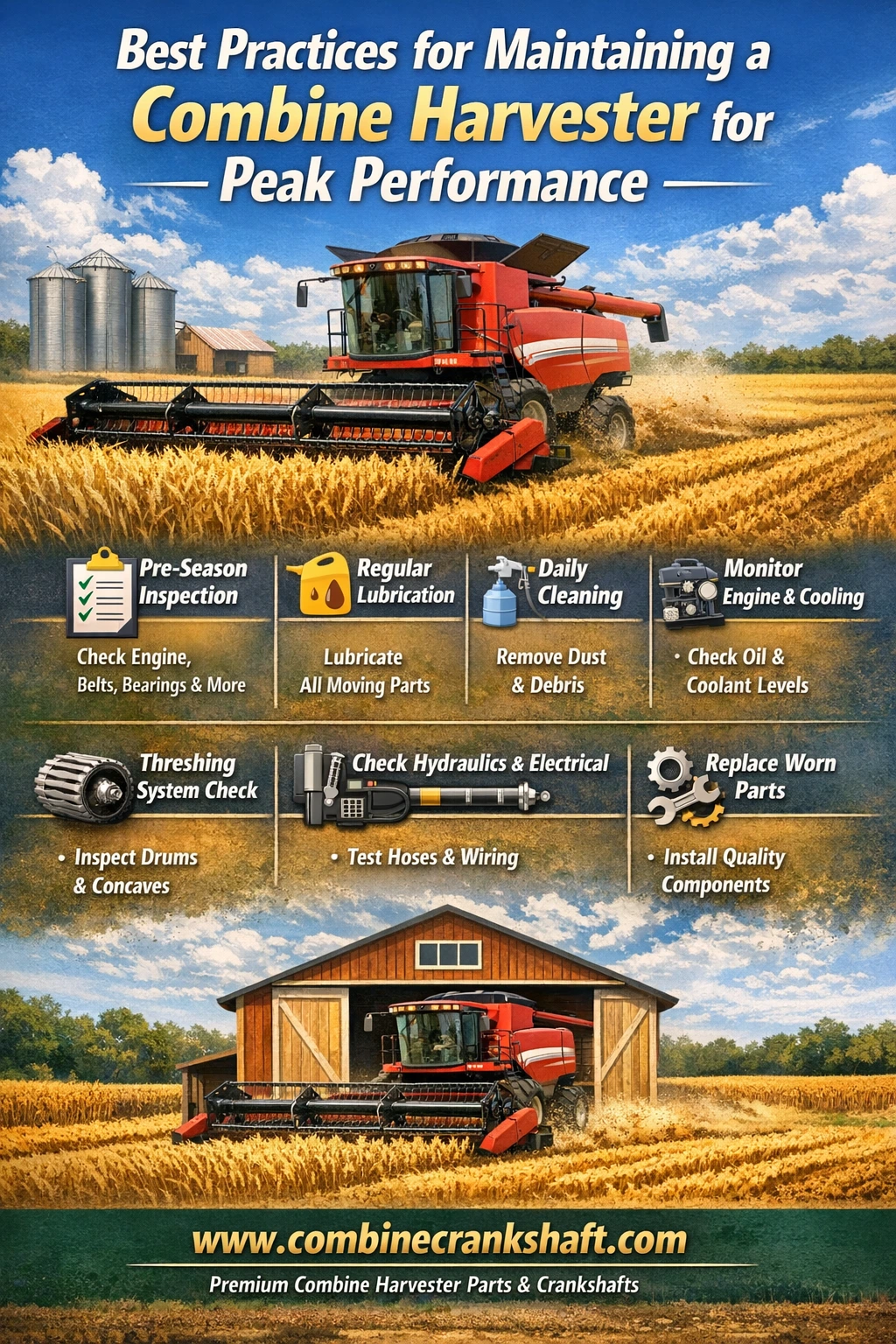
A combine harvester is one of the most valuable and hardworking machines on any farm. During harvest season, downtime can mean serious financial losses. Proper maintenance not only extends equipment lifespan but also ensures optimal efficiency, fuel savings, and consistent crop quality.
In this guide, we’ll cover practical and professional best practices to keep your combine harvester operating at peak performance throughout the season.
1. Perform Pre-Season Inspection Thoroughly
Before harvest begins, conduct a full inspection of:
-
Engine components
-
Belts and chains
-
Bearings and lubrication points
-
Hydraulic systems
-
Electrical connections
-
Tires or tracks
Check for wear, cracks, leaks, or loose fittings. Replacing worn-out combine harvester machine parts before the season starts helps prevent unexpected breakdowns in the field.
2. Follow a Strict Lubrication Schedule
Friction is the biggest enemy of harvesting machinery. Proper lubrication:
-
Reduces wear and tear
-
Prevents overheating
-
Improves fuel efficiency
-
Extends component life
Always follow the manufacturer’s lubrication chart and use recommended grease types. Pay special attention to high-movement areas like augers, chains, and rotating shafts.
3. Clean the Machine Daily During Harvest
Dust, crop residue, and debris accumulate quickly. Daily cleaning:
-
Prevents fire hazards
-
Improves airflow and cooling
-
Reduces corrosion risk
-
Enhances machine efficiency
Use compressed air to clean radiators, sieves, grain tanks, and engine compartments.
4. Monitor Engine and Cooling System
The engine is the heart of your combine. Regularly:
-
Check oil levels and change oil as recommended
-
Inspect coolant levels
-
Monitor temperature gauges
-
Replace clogged air filters
Reliable internal components from trusted suppliers like LK Agro ensure durability and consistent performance under heavy field conditions.
5. Inspect and Maintain Threshing & Separation Systems
The threshing drum, concaves, and separators require regular checking. Look for:
-
Uneven wear
-
Cracks
-
Misalignment
-
Loose bolts
Worn combine harvester machine parts in these areas directly impact grain quality and harvesting efficiency.
6. Check Electrical and Hydraulic Systems
Modern combines rely heavily on electronic controls and hydraulic mechanisms. Ensure:
-
No hydraulic leaks
-
Proper hose condition
-
Battery terminals are clean
-
Sensors and wiring are intact
Small electrical issues can quickly turn into costly repairs if ignored.
7. Replace Worn Components Promptly
Delaying part replacement often causes chain-reaction damage to nearby systems. Always invest in high-quality, precision-engineered components that match OEM standards to avoid operational downtime.
8. Store the Combine Properly After Season
Once harvest is complete:
-
Clean the machine thoroughly
-
Drain or stabilize fuel
-
Lubricate exposed metal parts
-
Store in a dry, covered location
-
Disconnect the battery
Proper storage prevents rust, corrosion, and unnecessary wear during off-season months.
Final Thoughts
Consistent maintenance is the key to maximizing productivity, minimizing downtime, and protecting your agricultural investment. A well-maintained combine harvester ensures smoother harvesting, better grain quality, and improved profitability season after season.
By following these best practices and sourcing durable components from reliable manufacturers, farmers can ensure long-term operational success.