


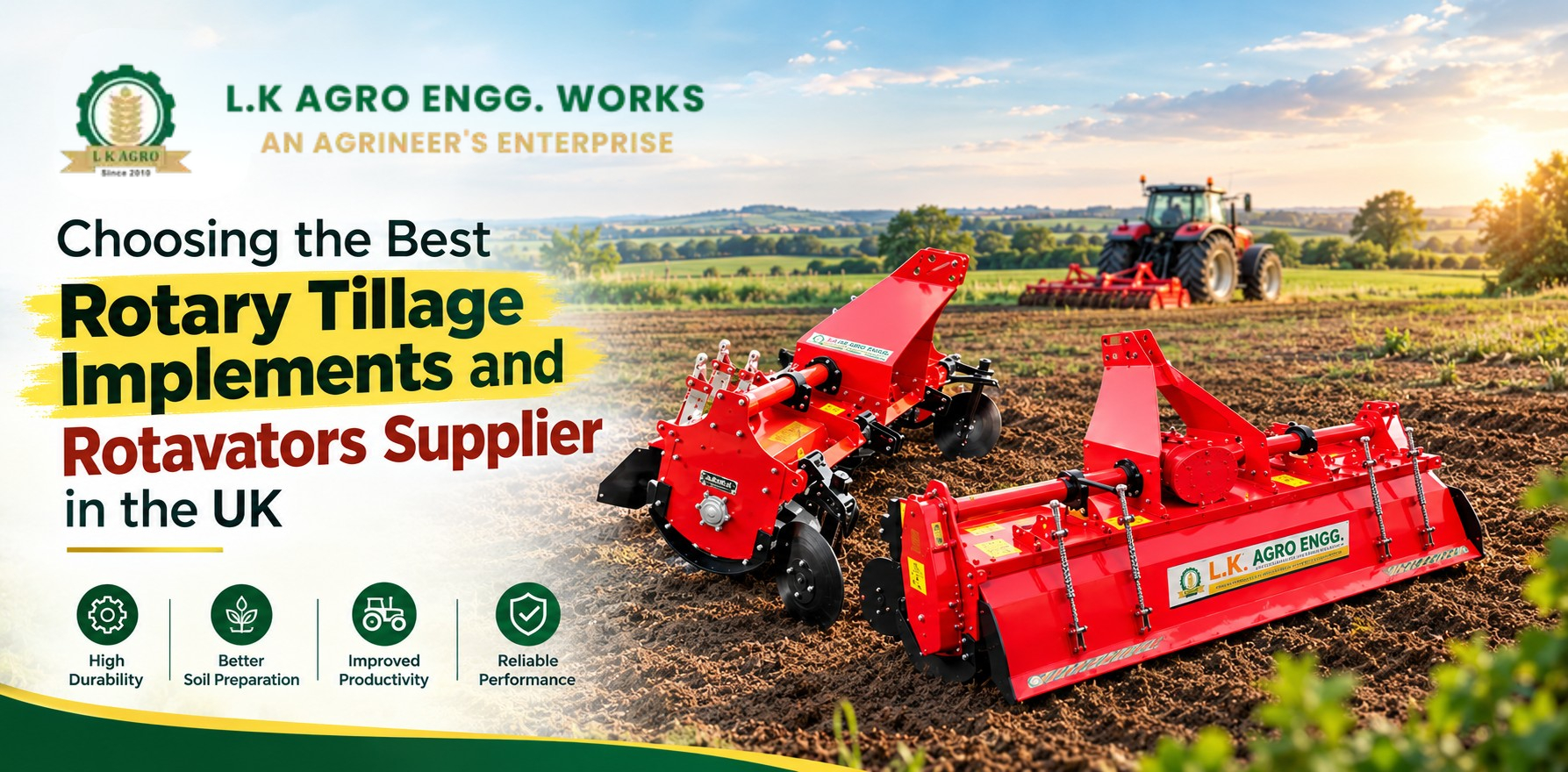
Choosing a reliable Rotary Tillage Implements and Rotavators Supplier in the UK is an important decision for farmers, agricultural contractors, and machinery distributors seeking efficient soil preparation equipment. The right supplier can help you identify suitable implements, understand compatibility requirements, and select machinery that matches your soil conditions, tractor specifications, and farming operations. A well-chosen rotary tillage solution can improve seedbed preparation, manage crop residues, and support consistent field performance.
The UK agricultural sector includes farms with different soil types, crop rotations, field sizes, and cultivation practices. As a result, there is no single rotary tillage implement that suits every operation. Buyers should evaluate equipment design, working width, operating depth, durability, maintenance requirements, and supplier support before making a purchase.
What Is Rotary Tillage and Why Does It Matter?
Rotary tillage is a soil preparation method that uses rotating blades or tines powered through a tractor's power take-off (PTO) or another suitable drive system. These blades work through the soil to break clods, mix surface residues, and create a suitable seedbed for planting.
Unlike some conventional cultivation implements that primarily loosen or turn the soil, rotary tillage machinery uses a rotating action to process soil within its working width. Depending on the equipment design and field conditions, this can help prepare a finer seedbed in fewer passes.
Rotary tillage is used in various agricultural settings, including vegetable production, horticulture, small-grain cultivation, and general field preparation. Its suitability depends on the soil's moisture content, texture, existing compaction, crop requirements, and the farming system.
Key Benefits of Rotary Tillage Equipment
Farmers consider rotary tillage implements for several practical reasons:
-
Seedbed preparation: Rotating blades can break soil clods and produce a more uniform surface for sowing.
-
Residue incorporation: Suitable machines can mix some crop residues into the upper soil layer.
-
Operational efficiency: Combining certain cultivation actions into one pass may reduce field time and fuel use compared with multiple separate operations.
-
Weed management: Mechanical cultivation can disturb young weeds, depending on the timing and working depth.
-
Flexible applications: Different implement configurations support a range of soil preparation tasks.
However, excessive rotary tillage can damage soil structure, increase the risk of erosion, and create a compacted layer under certain conditions. Choosing the correct working depth and avoiding unsuitable soil moisture levels are essential for responsible cultivation.
Types of Rotary Tillage Implements and Rotavators
Before contacting a supplier, identify the type of equipment that best suits your farming requirements. Rotary tillage implements differ in blade arrangement, construction, working width, drive configuration, and intended application.
The following table outlines common equipment categories and their potential uses.
|
Equipment type |
Primary application |
Important consideration |
|---|---|---|
|
Standard rotavator |
General soil preparation |
Tractor power and working width |
|
Heavy-duty rotary tiller |
Demanding cultivation conditions |
Frame strength and blade durability |
|
Reverse-rotation tiller |
Intensive soil processing |
Power demand and soil conditions |
|
Rotary hoe |
Surface cultivation and crust breaking |
Soil condition and crop stage |
|
Rotary bed former |
Preparing raised beds |
Bed dimensions and crop requirements |
|
Inter-row rotary cultivator |
Cultivation between crop rows |
Row spacing and crop protection |
Not every manufacturer offers all these categories, and product names may differ between suppliers. Confirm the equipment's actual specifications and intended use before comparing models.
How to Match Implements to Your Farming Needs?
The right implement depends on what you want to achieve in the field. Vegetable growers may prioritise fine seedbed preparation and consistent bed dimensions, while larger farms may focus on working width, output per hour, and compatibility with existing tractors.
For heavier soils, assess whether the machine is designed for the expected workload and whether the tractor can supply sufficient power. For lighter soils, consider whether the implement can achieve the desired finish without excessive pulverisation.
Also consider whether you need a standalone rotary tiller or a machine that combines cultivation with another operation. The best choice is the one that delivers the required result without unnecessary operating costs or soil disturbance.
How to Choose a Reliable Rotary Tillage Supplier?
Selecting a Rotary Tillage Implements and Rotavators Supplier in the UK involves more than comparing prices. Equipment quality, technical specifications, spare-part availability, and communication can all affect the long-term value of your investment.
A dependable supplier should help you understand the differences between available machines and establish whether a particular implement is appropriate for your operation.
1. Check Equipment Quality and Build Materials
Rotary tillage implements operate in demanding conditions, where blades, bearings, gearboxes, drive components, and structural parts experience repeated mechanical stress. Equipment quality therefore plays an important role in reliability and operating life.
Ask suppliers about the materials used in critical components, manufacturing standards, component protection, and quality-control procedures. For imported machinery, request technical documentation and information about replacement parts.
A strong frame alone does not guarantee durability. The quality of moving parts, correct assembly, lubrication arrangements, and suitability for the intended workload also matter.
2. Confirm Tractor Compatibility and Power Requirements
A rotavator must match the tractor that will operate it. An implement that is too wide or demands more power than the tractor can provide may work inefficiently or place unnecessary strain on the drivetrain.
Before purchasing, compare the following specifications:
-
Tractor horsepower and the implement's recommended power range.
-
PTO speed and shaft compatibility.
-
Three-point linkage category and lifting capacity.
-
Implement working width and expected field output.
-
Machine weight and tractor stability.
-
Gearbox configuration and available drive options.
Ask the supplier to confirm compatibility using your tractor's make, model, horsepower, and PTO specifications. Do not rely on working width alone when selecting equipment.
3. Evaluate Blade Design and Working Depth
Blade design influences how rotary tillage machinery cuts, mixes, and breaks down soil. Blade shape, thickness, arrangement, and material should suit the intended application.
The working depth also affects soil disturbance, power consumption, and the quality of the seedbed. Deeper cultivation generally requires more power, particularly in heavy or compacted soil.
Ask about blade replacement procedures, wear resistance, availability of compatible replacement blades, and recommended operating settings. These details can help you estimate maintenance needs before purchasing.
4. Compare Warranty and After-Sales Support
A supplier's support arrangements become particularly important when machinery is used during time-sensitive cultivation periods. Equipment downtime can delay field operations and disrupt planting schedules.
Before placing an order, clarify the warranty period, covered components, exclusions, and procedure for reporting defects. Find out whether technical assistance is available remotely or through local service partners.
For UK buyers sourcing machinery internationally, also confirm shipping arrangements, delivery timelines, customs responsibilities, and the availability of spare parts within the UK. A competitive purchase price may be less attractive if replacement components take a long time to arrive.
Essential Factors for Comparing Rotavator Suppliers
Comparing suppliers using the same criteria makes it easier to assess value objectively. Instead of choosing the lowest quotation immediately, examine the complete cost of ownership and the supplier's ability to meet your requirements.
|
Evaluation factor |
What to verify |
Why it matters |
|---|---|---|
|
Product specifications |
Dimensions, weight, working width and depth |
Confirms suitability for the job |
|
Build quality |
Materials and manufacturing checks |
Supports dependable operation |
|
Tractor compatibility |
Horsepower, PTO and linkage requirements |
Helps prevent mismatched equipment |
|
Replacement parts |
Availability, price and delivery time |
Reduces maintenance delays |
|
Warranty |
Coverage and claim procedure |
Clarifies after-sales protection |
|
Total cost |
Purchase, freight, taxes and maintenance |
Supports accurate budgeting |
|
Supplier credibility |
Business history and customer references |
Helps assess reliability |
|
Technical assistance |
Installation and operating guidance |
Supports correct machine use |
Request a written quotation that lists the machine configuration, included accessories, delivery terms, payment conditions, and warranty details. Comparing quotations on the same basis helps prevent unexpected costs.
Is Rotary Tillage Suitable for UK Soil Conditions?
The UK has diverse agricultural soils, ranging from sandy and free-draining land to clay-rich soils that retain moisture. Local weather, drainage, field history, and crop type can influence when and how rotary tillage should be performed.
On suitable soil, a rotavator can help prepare a workable seedbed. However, operating machinery when soil is too wet can smear soil surfaces, damage structure, and contribute to compaction. Excessive cultivation can also break down aggregates and leave fine soil vulnerable to erosion.
Consider the following before beginning fieldwork:
-
Soil moisture: Work when the soil is friable rather than excessively wet.
-
Soil texture: Adjust machine settings to the characteristics of sandy, loamy, or clay-rich soil.
-
Crop requirements: Match the seedbed finish and working depth to the crop being planted.
-
Residue levels: Confirm that the selected machine can handle the amount and type of crop residue present.
-
Cultivation strategy: Consider whether reduced tillage or a combination of cultivation methods would better protect soil structure.
Rotary tillage is not automatically the best option for every field. A suitable cultivation plan balances seedbed quality, crop establishment, fuel use, soil health, and the number of required passes.
Why Manufacturing Experience Matters in Agricultural Machinery?
Agricultural machinery depends on the performance of individual components as well as the overall machine design. Shafts, bearings, gears, blades, and drive assemblies must work together under changing loads and operating conditions.
Manufacturing experience can help a business develop repeatable production processes, inspect components, and respond to specific engineering requirements. Nevertheless, buyers should evaluate the relevant product's quality and suitability rather than relying on company experience alone.
When assessing a manufacturer or supplier, ask about material selection, dimensional accuracy, machining processes, inspection procedures, and the availability of custom manufacturing where required. For critical components, technical drawings and agreed specifications can help ensure that the delivered product meets the intended application.
The Role of Custom Engineering and Quality Control
Some agricultural machinery requirements cannot be met by a standard configuration. Differences in tractor specifications, operating conditions, equipment dimensions, or replacement-part requirements may call for a customised solution.
A capable manufacturing partner should be able to review technical requirements and explain what can realistically be produced. Buyers should provide accurate drawings, dimensions, material requirements, tolerances, and intended operating conditions wherever applicable.
Quality control should cover the relevant manufacturing stages, including incoming materials, machining accuracy, assembly where applicable, and final inspection. Ask what documentation or inspection records are supplied with the product.
How L.K Agro Engg. Works Supports Agricultural Machinery?
L.K Agro Engg. Works brings more than 40 years of agricultural engineering experience, with a core manufacturing focus on straw walker crankshafts for combine harvesting machines. The company highlights advanced research and development, manufacturing capabilities, custom solutions, and service for major brands and original equipment manufacturers, including KARTAR COMBINES.
This engineering background is relevant when evaluating agricultural machinery manufacturers and component suppliers. However, buyers should distinguish between a company's established manufacturing specialisation and the specific rotary tillage products currently available.
If you are considering L.K Agro Engg. Works for rotary tillage implements, rotavator components, or related machinery requirements, request its current product catalogue and confirm the exact scope of supply. Ask about product specifications, customisation options, export arrangements, quality checks, and after-sales support for UK customers.
For international buyers, it is particularly important to verify whether the company supplies complete implements, individual components, or products made to specific engineering requirements. Confirming these details before requesting a quotation helps ensure that the proposed solution matches your needs.
Common Mistakes to Avoid When Buying Rotavators
Even well-designed equipment may perform poorly if it is selected or operated incorrectly. Avoid these common purchasing mistakes:
-
Choosing by price alone: A low initial cost may not reflect durability, parts availability, or long-term maintenance expenses.
-
Ignoring tractor specifications: Incorrect power or PTO requirements can affect performance and safe operation.
-
Overlooking spare parts: Confirm the availability of blades, bearings, drive components, and other service parts.
-
Assuming every soil type is suitable: Verify the implement's intended applications and operating limitations.
-
Skipping supplier checks: Review the business's credentials, technical documentation, warranty terms, and customer references.
-
Ignoring import costs: International buyers should calculate freight, applicable duties, taxes, and local servicing expenses.
A careful evaluation before purchase can help prevent avoidable costs and make machinery selection more straightforward.
Frequently Asked Questions
1. What should I look for in a rotary tillage implements supplier in the UK?
Look for suitable product specifications, reliable manufacturing quality, tractor compatibility, clear warranty terms, spare-parts availability, and responsive technical support. Compare the total purchase and operating costs rather than focusing only on the initial price.
2. What is the difference between rotary tillage and conventional tillage?
Rotary tillage uses powered rotating blades to cut and mix soil, while conventional tillage may use implements such as ploughs and cultivators to loosen, lift, or turn the soil. The appropriate method depends on soil conditions, crop requirements, and the cultivation system.
3. How do I select the right rotavator for my tractor?
Check your tractor's horsepower, PTO specifications, linkage category, lifting capacity, and operating requirements. Match these details with the manufacturer's recommendations for the implement's working width, weight, and power demand.
4. How often should rotary tillage blades be replaced?
Replacement frequency depends on soil abrasiveness, field conditions, operating hours, blade material, and maintenance practices. Inspect blades regularly for wear, cracks, deformation, and damage, and follow the manufacturer's replacement recommendations.
5. Can UK buyers purchase rotary tillage equipment from international manufacturers?
Yes. UK buyers can source suitable agricultural machinery and components from international manufacturers, provided the products meet their requirements. Confirm export availability, specifications, shipping costs, import responsibilities, warranty coverage, and access to replacement parts before placing an order.
Choose the Right Rotary Tillage Solution for Your Farm
Selecting the right rotary tillage implement requires a clear understanding of your soil conditions, tractor capabilities, cultivation objectives, and maintenance requirements. A reliable supplier should provide accurate specifications, transparent commercial terms, and practical support throughout the purchasing process.
With more than four decades of agricultural engineering experience, L.K Agro Engg. Works offers manufacturing expertise in agricultural machinery components and custom engineering requirements. Buyers interested in rotary tillage products should confirm the available range and discuss their specific application before proceeding.
Ready to find the right solution for your agricultural operation? Define your equipment requirements, compare suitable suppliers, and request detailed specifications and quotations to make an informed investment in rotary tillage machinery.