



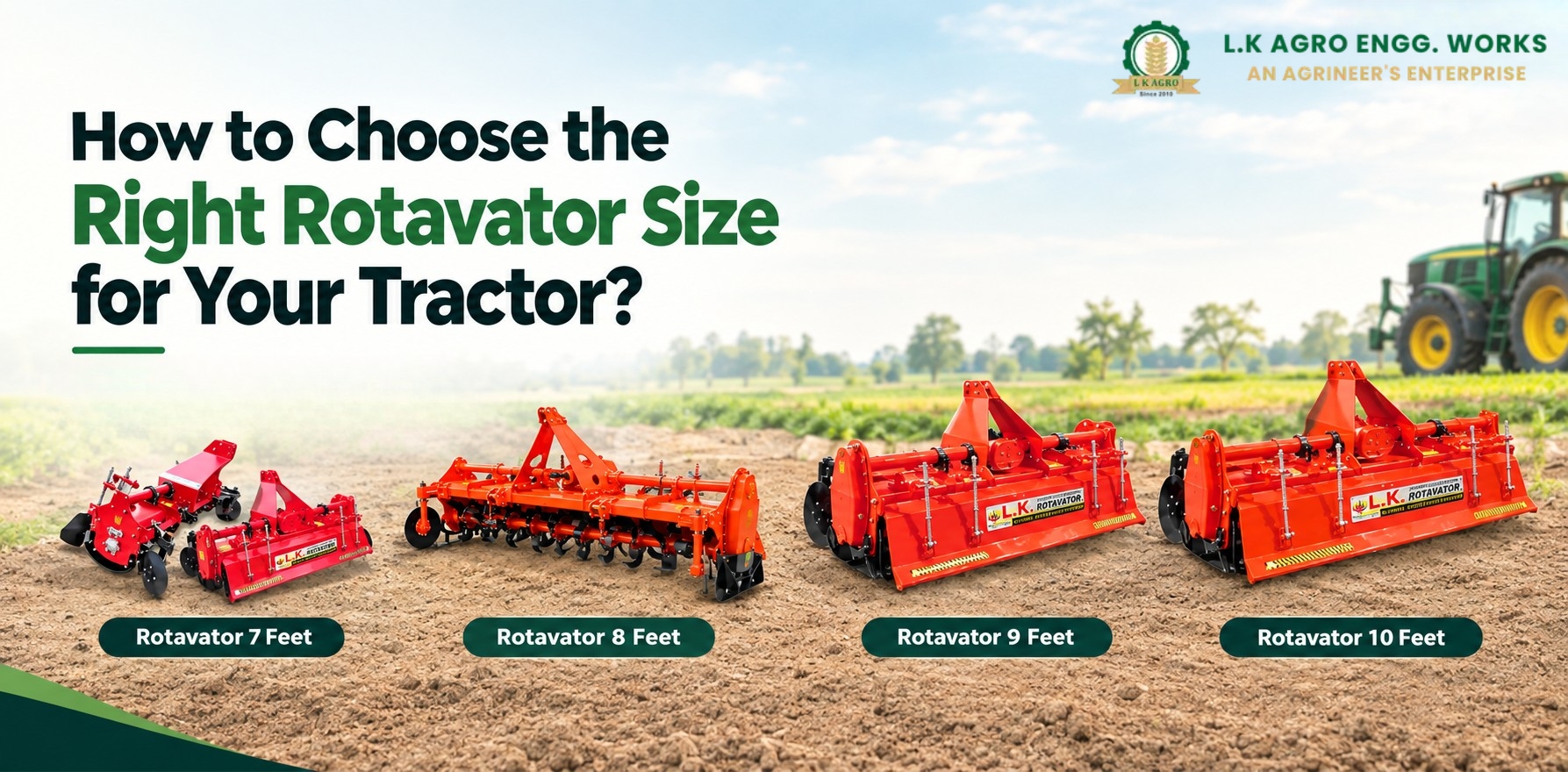
Choosing the right Rotavator Size is essential for efficient soil preparation, better field coverage, and smooth tractor performance. A rotavator that is too large can put excessive load on the tractor, while a smaller machine may require more passes and increase working time. The ideal size depends on tractor horsepower, soil type, working depth, field size, and the type of farming operation.
For farmers and agricultural contractors, choosing the right combination of tractor and rotavator can improve productivity while helping maintain consistent field performance.
Why Choosing the Correct Rotavator Size Matters?
A rotavator works through the tractor's PTO to rotate blades that break and mix the soil. Its working width determines how much land can be covered in a single pass.
A wider machine can cover more area, but it generally requires greater tractor capacity. If the tractor struggles to maintain working speed, fuel consumption and operating efficiency can be affected.
The goal is not simply to select the widest rotavator available, but to find the right balance between tractor power, working width, soil conditions, and required depth.
What Factors Determine the Right Rotavator Size?
Several factors should be considered before selecting a rotavator.
Match Rotavator Width With Tractor Horsepower
Tractor horsepower is an important starting point. Wider rotavators normally require more power because they work over a larger area during each pass.
However, the actual requirement can vary depending on soil condition, working depth, blade configuration, crop residue, and operating speed. Always check the recommended tractor range for the specific rotavator model.
Consider Soil Type and Field Conditions
Hard or compacted soil generally requires more power than loose soil. Heavy clay and fields with substantial crop residue can also increase the load on the tractor and rotavator.
If your fields regularly have challenging soil conditions, consider these factors rather than choosing a rotavator based only on minimum horsepower recommendations.
Consider Field Size and Maneuverability
Field size also influences the right working width. Wider rotavators can cover more land per pass and may be useful for larger fields.
For smaller or irregular fields, a narrower implement may be easier to maneuver around boundaries, irrigation structures, and tight turning areas.
Comparing 7, 8, 9 and 10 Feet Rotavators
Different working widths are suitable for different field requirements. The final choice should always be matched with tractor specifications and manufacturer recommendations.
|
Rotavator Size |
Main Advantage |
Best Consideration |
|
7 Feet |
Good maneuverability |
Small to medium fields |
|
8 Feet |
Balance of coverage and control |
Medium to larger fields |
|
9 Feet |
Higher coverage per pass |
Larger fields with adequate power |
|
10 Feet |
Maximum coverage |
Large operations with suitable tractor capacity |
A wider implement is not automatically the better choice. Tractor power, PTO capacity, soil condition, and working depth should all be considered together.
Rotavator 7 Feet for Practical Field Coverage
A Rotavator 7 feet can be a practical option for farmers looking for good working coverage while maintaining maneuverability. It can be useful where field access or turning space is limited.
Before selecting this size, check the tractor's power and the manufacturer's recommended specifications.
Rotavator 8 Feet for Balanced Performance
A Rotavator 8 feet provides greater coverage than a 7-foot model while remaining manageable for many farming applications.
It can be considered when farmers want to increase field coverage without moving to a very wide implement. Tractor capacity and soil conditions should still be evaluated before purchase.
Rotavator 9 Feet for Larger Agricultural Fields
A Rotavator 9 feet can cover more area in each pass, making it worth considering for larger fields where field productivity is important.
However, its wider working width also requires sufficient tractor power and PTO capacity. Working depth and soil conditions should be considered before selecting this option.
Rotavator 10 Feet for Maximum Working Width
A Rotavator 10 feet offers the widest coverage among these options. It can be suitable for larger agricultural operations where the tractor has sufficient capacity to handle the implement.
Selecting a 10-foot rotavator simply because it covers more area may not provide better results if the tractor is not appropriately matched.
How Working Width Affects Field Productivity
Working width directly affects the theoretical area covered during each pass. A wider rotavator can reduce the number of passes required, but actual field capacity also depends on operating speed, turning time, overlap, and field conditions.
For example, moving from a 7-foot to a 10-foot working width provides substantially more coverage per pass. However, the tractor must have enough capacity to operate the wider implement efficiently.
Check PTO and Hydraulic Capacity Before Buying
Horsepower is not the only specification to consider. The tractor's PTO should be capable of delivering the required power, while its hydraulic system must safely lift and control the implement.
Before buying, check:
-
Tractor engine and PTO horsepower
-
Recommended PTO speed
-
Three-point linkage capacity
-
Hydraulic lifting capacity
-
Rotavator operating weight
-
Recommended working depth
-
Soil and residue conditions
-
Manufacturer's implement recommendations
Avoid These Common Rotavator Selection Mistakes
One common mistake is choosing a rotavator only because it has a wider working width. A wider machine can be productive only when the tractor can operate it properly.
Another mistake is ignoring soil conditions. Hard or heavy soil can significantly increase power requirements.
Farmers should also avoid relying on a single generic horsepower figure because implement design, weight, blades, gearbox, working depth, and field conditions can all affect performance.
A Simple Rotavator Selection Checklist
Before making your decision:
-
Check your tractor's horsepower and PTO capacity.
-
Review the manufacturer's recommended tractor range.
-
Assess your soil and typical field conditions.
-
Consider your required working depth.
-
Compare 7, 8, 9, and 10-foot working widths.
-
Check the tractor's hydraulic lifting capacity.
-
Consider field size and maneuverability.
-
Choose based on actual operating requirements rather than width alone.
About L.K Agro Engg. Works
With 40+ years of agricultural engineering experience, L.K Agro Engg. Works focuses on quality manufacturing, practical engineering, and reliable agricultural solutions.
The company combines experienced engineering knowledge with advanced R&D and manufacturing capabilities and serves major brands, including KARTAR COMBINES. It also offers custom solutions based on client requirements along with reliable after-sales support.
Key strengths include:
-
40+ years of agricultural expertise
-
Advanced R&D and manufacturing
-
Experience serving major brands
-
Custom solutions for client requirements
-
Reliable after-sales service
Choose the Right Rotavator for Your Tractor
The right Rotavator Size depends on more than working width. Tractor horsepower, PTO capacity, soil type, working depth, field size, and maneuverability should all be considered before making a decision.
Whether you are comparing a 7-foot, 8-foot, 9-foot, or 10-foot rotavator, selecting a properly matched implement can help support efficient and consistent field operations.
Looking for a suitable rotavator for your agricultural requirements? Explore the rotavator options from L.K Agro Engg. Works and discuss your tractor specifications and field requirements with the team to find a suitable solution.
FAQs About Rotavator Size
1. How do I choose the right Rotavator Size?
Consider tractor horsepower, PTO capacity, soil type, working depth, field size, and the manufacturer's recommended tractor range.
2. Is a wider rotavator always better?
No. A wider rotavator can cover more land per pass but requires sufficient tractor capacity to operate efficiently.
3. What should I consider when choosing a 7 or 8-foot rotavator?
Check tractor power, soil conditions, working depth, field size, maneuverability, and the recommended specifications of the specific model.
4. When should I choose a 9 or 10-foot rotavator?
These wider options can be considered for larger fields when the tractor has adequate horsepower, PTO capacity, and lifting capability.
5. Does soil type affect rotavator selection?
Yes. Hard, compacted, clay-heavy, wet, or residue-rich soil can increase the load on the rotavator and tractor, making soil conditions an important part of the selection process.