



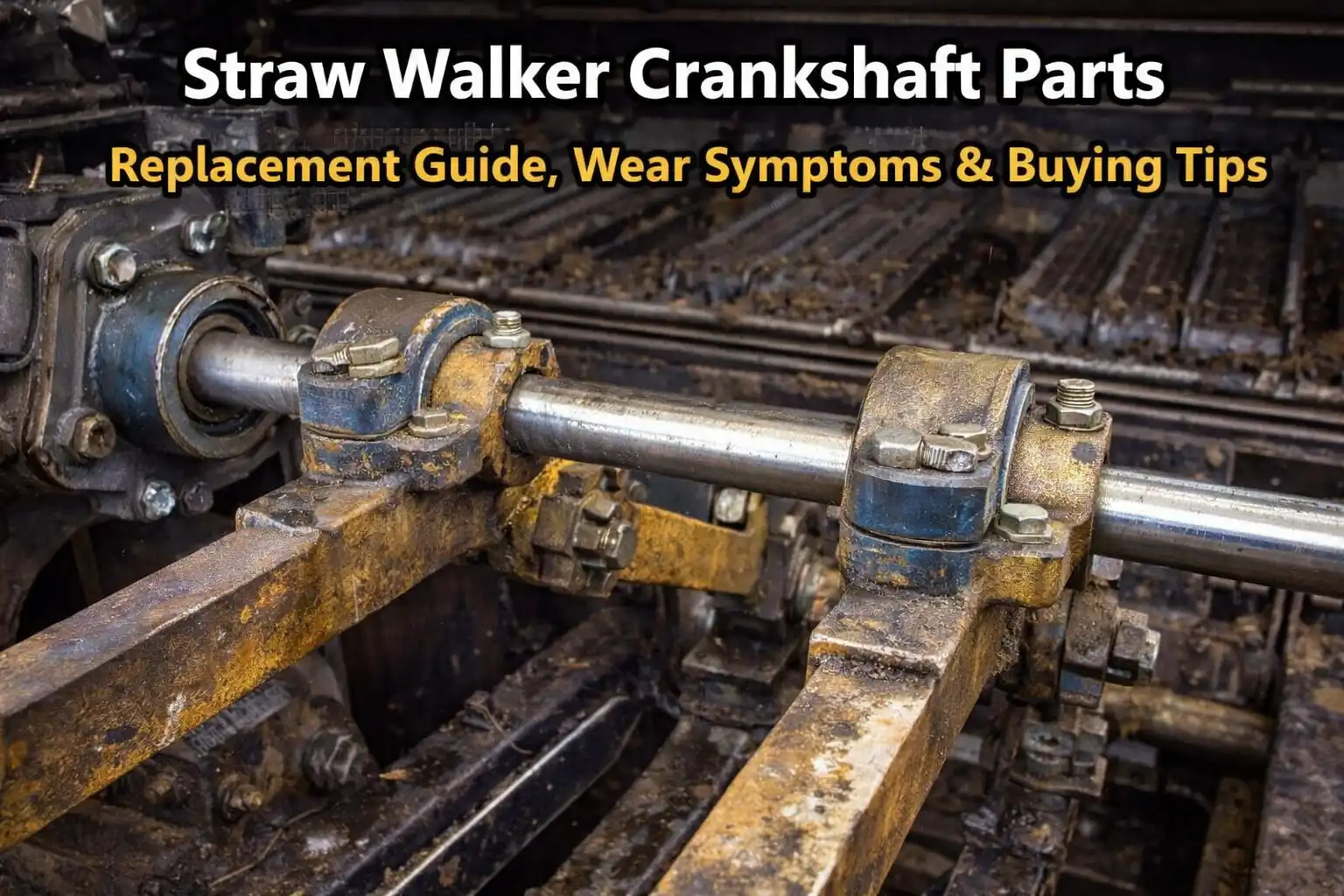
Harvest season is the most demanding time for any combine harvester. When machines run for long hours in dusty, heavy crop conditions, certain internal components face intense stress. One of the most critical yet often overlooked assemblies inside the harvester is the system that drives the straw walker mechanism. When this area starts failing, the entire harvesting performance drops, leading to grain loss, vibration, noise, and unexpected breakdowns in the field.
Understanding how this mechanism works, what damage looks like, and how to replace the right components at the right time can save farmers and machine owners from costly downtime.
This guide explains the symptoms of failure, replacement insights, and how to choose reliable straw walker crankshaft parts for long-term performance.
Understanding the Role of the Straw Walker Drive Mechanism
Inside a combine harvester, the straw walker is responsible for separating residual grains from straw after threshing. It moves in a rhythmic oscillating motion, driven by a crankshaft-based linkage system. This movement must be perfectly balanced. Even slight wear in the crankshaft arms, bearings, housings, or connecting links can disturb the motion, resulting in excessive vibration and reduced separation efficiency.
Because this system runs continuously during harvesting, its components are among the most stressed parts of the machine.
Common Symptoms of Damage During Harvesting
Many farmers ignore early warning signs until a complete breakdown occurs. Recognizing symptoms early helps prevent major failures.
1. Unusual Vibration in the Rear Section
If the rear of the harvester starts shaking more than usual, it often indicates wear in the crankshaft arms or bearings.
2. Metallic Knocking Noise
A repeated knocking sound during operation usually points to looseness in the linkage or bearing housing.
3. Poor Grain Separation
When grains begin appearing in the straw output, the walker motion is no longer balanced.
4. Frequent Bearing Failures
If bearings are failing repeatedly, the alignment of the crankshaft assembly may be compromised.
5. Visible Play in Moving Parts
Manual inspection often reveals looseness in the arms and joints.
These are clear indicators that the straw walker crankshaft parts require immediate inspection or replacement.
Why These Components Fail Frequently
Several reasons contribute to faster wear:
-
Continuous oscillation for long hours
-
Dust and crop residue entering joints
-
Lack of timely lubrication
-
Use of low-quality metal parts
-
Improper fitting during previous repairs
Over time, even high-quality components wear out due to friction and load. However, premature failure is usually linked to poor material quality or incorrect installation.
Key Parts Involved in the Assembly (LK01 – LK15 Series)
For proper maintenance and replacement, it’s important to understand the complete set of components involved in this mechanism. The commonly replaced items fall under the LK01 to LK15 range, which typically includes:
-
Crankshaft arms
-
Bearing housings
-
Connecting links
-
Support brackets
-
Oscillation joints
-
Mounting plates
-
High-tensile bolts and fittings
-
Balancing components
-
Bushes and sleeves
-
Alignment supports
Replacing only one damaged piece without checking the full LK01–LK15 set often leads to repeated issues. A complete inspection ensures smoother operation and longer life.
When Should You Replace Instead of Repair?
Many mechanics attempt welding or temporary fixes to save money. While this may work for a short time, it often leads to misalignment and bigger failures later.
You should replace parts when:
-
Cracks appear in arms or housings
-
Bearing seats become loose
-
Metal thinning is visible due to friction
-
Repeated vibration continues after repair
-
Alignment cannot be restored perfectly
Investing in proper straw walker crankshaft parts is always more economical than facing a breakdown during peak harvest.
How to Choose the Right Parts for Your Combine Harvester
Not all spare parts available in the market are built with the same precision. Since this system depends heavily on balance and alignment, part accuracy is critical.
Here’s what to check before buying:
Material Strength
Parts should be made from high-grade steel capable of handling continuous oscillation.
Precision Machining
Even slight dimensional errors can cause imbalance.
Proper Finishing
Rough surfaces increase friction and reduce bearing life.
Model Compatibility
Ensure the parts match your specific combine harvester model.
Complete Set Availability
Prefer suppliers who provide the entire LK01–LK15 range to ensure compatibility.
Trusted manufacturers like L.K. Agro Engg. Works focus on precision engineering for these components, ensuring durability and proper fitting.
Maintenance Tips to Increase Lifespan
Regular maintenance can significantly extend the life of these components:
-
Lubricate bearings and joints before every harvesting cycle
-
Clean dust and residue after daily operation
-
Check bolt tightness weekly
-
Inspect for vibration changes during operation
-
Replace worn bushes before they affect alignment
Preventive care reduces the need for emergency replacements.
The Cost of Ignoring Early Signs
Ignoring vibration or noise might seem harmless initially, but the consequences can include:
-
Damage to the straw walker frame
-
Bearing housing breakage
-
Complete halt of harvesting work
-
Higher repair costs
-
Grain loss due to poor separation
Timely replacement of straw walker crankshaft parts ensures smooth harvesting and avoids these risks.
Final Thoughts
The straw walker drive system is the heart of grain separation in a combine harvester. While it works silently in the background, its condition directly affects harvesting efficiency, machine stability, and crop output.
By understanding the warning signs, knowing the LK01–LK15 component range, and choosing high-quality replacement parts, farmers and machine owners can ensure uninterrupted performance throughout the season.
Regular inspection, proper maintenance, and timely replacement are the keys to keeping your harvester running at its best when you need it the most.