



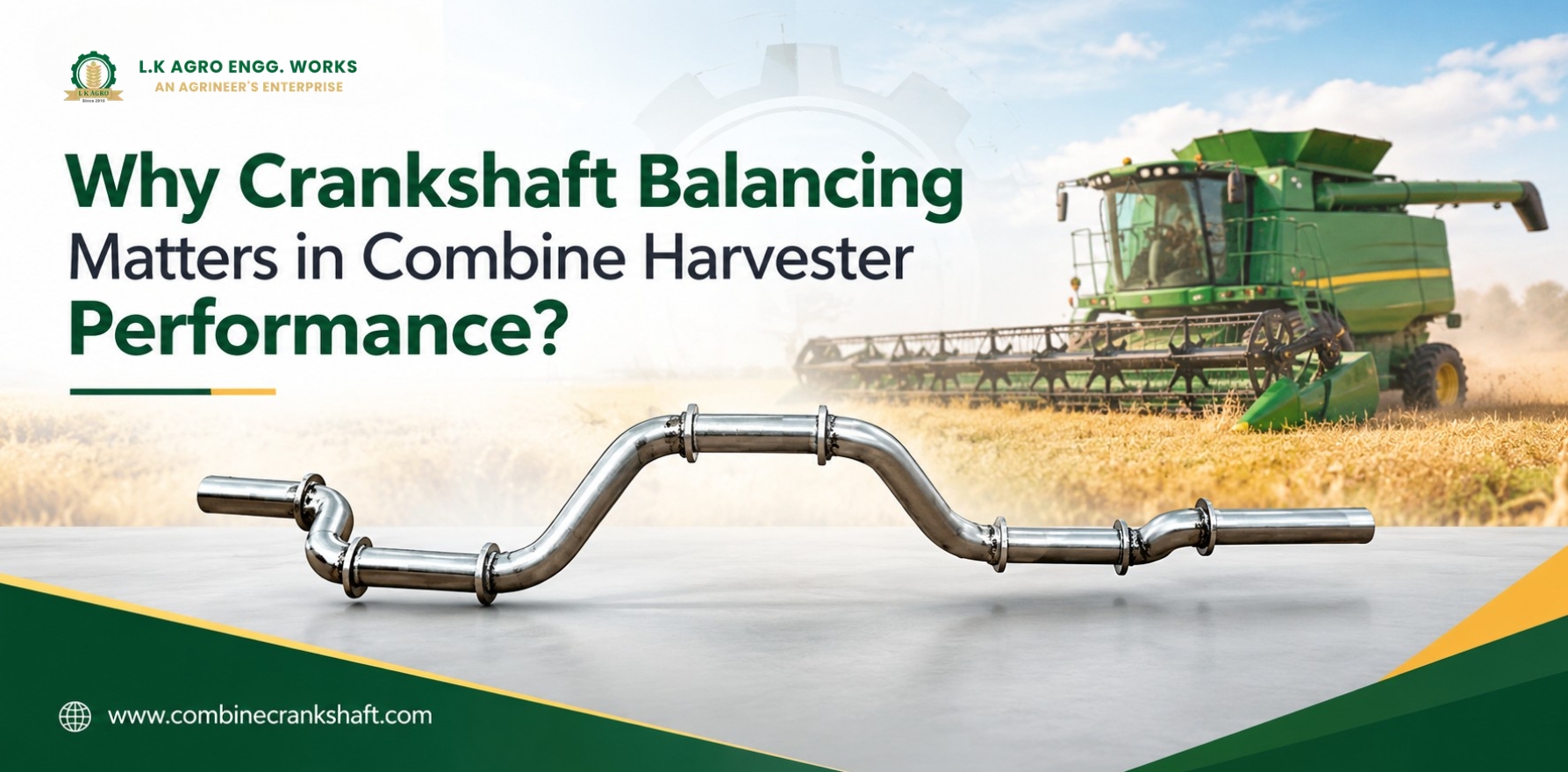
A combine harvester works through a combination of rotating, reciprocating, and moving components that must operate together efficiently during demanding harvesting conditions. Among these components, the crankshaft plays an important role in converting rotational motion into the movement required by different mechanical systems.
But having a correctly manufactured crankshaft is only part of the equation. Crankshaft balancing is equally important because an imbalance can create unwanted vibration, increase mechanical stress, accelerate component wear, and affect the overall performance of a combine harvester.
For farmers, operators, and agricultural machinery professionals, understanding why crankshaft balancing matters can help prevent avoidable breakdowns and maintain reliable machine performance throughout the harvesting season.
What Is Crankshaft Balancing?
Crankshaft balancing is the process of ensuring that the rotating mass of a crankshaft is distributed correctly around its axis of rotation.
A properly balanced crankshaft rotates smoothly, while an unbalanced crankshaft can generate excessive centrifugal forces. These forces may result in vibration and additional loads on bearings, connecting components, housings, and other parts connected to the crankshaft.
In a combine harvester, where machinery can operate for extended periods under heavy loads, maintaining proper balance becomes particularly important.
The goal of balancing is not simply to make the crankshaft rotate. It is to help the complete mechanical system operate with controlled vibration, consistent movement, and reduced unnecessary stress.
Why Does Crankshaft Balancing Matter in a Combine Harvester?
Combine harvesters often work in challenging field conditions, including long operating hours, varying loads, dust, heat, and uneven crop conditions. These factors place considerable demands on mechanical components.
A balanced crankshaft can contribute to smoother operation and help reduce unnecessary mechanical stress.
1. Reduces Excessive Vibration
One of the most noticeable signs of crankshaft imbalance is excessive vibration.
When a rotating crankshaft is not properly balanced, centrifugal forces can increase as rotational speed rises. The resulting vibration may be transferred to connected components and the machine structure.
Excessive vibration can make the machine uncomfortable to operate and may also indicate that components are experiencing forces beyond their normal operating conditions.
A properly balanced Straw Walker Crankshaft helps support smoother mechanical operation and reduces the possibility of vibration caused by crankshaft imbalance.
2. Helps Reduce Component Wear
Unwanted vibration does not remain isolated to the crankshaft.
Continuous vibration can place additional stress on bearings, shafts, mounting points, fasteners, housings, and other connected components. Over time, this may contribute to premature wear.
Proper crankshaft balancing helps the rotating assembly operate more smoothly, which can support better component durability when the machine is correctly maintained and operated.
This is particularly important when replacing Straw Walker Crankshaft Parts, because every related component needs to work correctly with the crankshaft assembly.
3. Supports Efficient Machine Operation
A combine harvester needs consistent mechanical movement to perform effectively. If excessive vibration or imbalance affects the rotating assembly, mechanical efficiency can be compromised.
A properly balanced crankshaft allows rotational forces to be managed more effectively, helping connected mechanisms maintain their intended movement.
While balancing alone cannot guarantee fuel efficiency or harvesting performance, it is an important part of maintaining a mechanically sound machine.
4. Protects Bearings and Supporting Components
Bearings are designed to support rotating shafts and allow controlled movement. Excessive forces caused by crankshaft imbalance can place additional loads on these components.
Over time, abnormal loading can contribute to bearing wear and other mechanical problems.
When installing or replacing Combine Harvester Crankshaft Parts, it is therefore important to consider the condition and compatibility of the entire assembly rather than focusing only on the crankshaft itself.
How Does an Unbalanced Crankshaft Affect Combine Performance?
Crankshaft imbalance can appear in different ways depending on the severity of the problem and the condition of other components.
Common symptoms may include:
-
Excessive vibration during operation
-
Unusual mechanical noise
-
Faster bearing wear
-
Loose or repeatedly failing fasteners
-
Irregular movement of connected mechanisms
-
Increased stress on supporting components
-
Premature wear of crankshaft-related parts
-
Reduced smoothness during machine operation
These symptoms should not automatically be attributed to crankshaft imbalance. Misalignment, worn bearings, damaged components, incorrect installation, and other mechanical problems can produce similar signs.
For this reason, proper inspection and diagnosis are important before replacing components.
The Role of a Straw Walker Crankshaft
The straw walker mechanism is an important part of many conventional combine harvester designs. Its movement helps separate remaining grain from the harvested material after threshing.
The crankshaft associated with this mechanism needs to operate consistently because irregular movement can affect the mechanical action of the straw walkers.
A Combine Straw Walker Crankshaft therefore needs appropriate dimensions, material quality, machining accuracy, and balance for the intended application.
When selecting a replacement, operators should consider the specific combine model, shaft specifications, dimensions, mounting arrangement, and operating requirements.
Crankshaft Balancing and Replacement Parts
Replacing a damaged crankshaft does not necessarily solve every vibration problem.
Before installing a new crankshaft, it is useful to inspect related components for signs of wear or damage. These can include:
-
Bearings
-
Bushes
-
Connecting components
-
Mounting points
-
Fasteners
-
Drive components
-
Seals
-
Associated shafts and linkages
Using suitable combine harvester crankshaft parts can help maintain compatibility within the mechanical assembly.
The replacement process should also follow the manufacturer's specifications for installation, alignment, torque, and clearances.
Why Manufacturing Accuracy Matters?
Crankshaft balancing begins with accurate manufacturing.
A quality crankshaft requires appropriate machining and dimensional control so that its journals, counterweights, and other critical surfaces meet the required specifications.
Manufacturing accuracy can influence how the crankshaft fits and rotates within the assembly.
This is why choosing an experienced Straw Walker Combine Manufacturers or agricultural machinery component supplier can be an important consideration when sourcing replacement crankshafts.
Manufacturers with relevant engineering and machining capabilities can help ensure that components are produced according to the required specifications.
Common Causes of Crankshaft Imbalance
Crankshaft imbalance can originate from several factors.
Manufacturing Variation
Manufacturing inaccuracies or incorrect mass distribution can affect crankshaft balance.
Wear and Damage
A crankshaft that has experienced prolonged operation, impact, corrosion, or surface damage may no longer perform as intended.
Incorrect Repair
Improper machining or repair can change the mass distribution of a crankshaft.
Incorrect Assembly
Incorrect installation, damaged bearings, misalignment, or improperly fitted components can contribute to vibration and mechanical problems.
Foreign Material or Damage
Heavy contamination, accumulated material, or physical damage to associated components can also influence mechanical operation.
A proper inspection is therefore important before determining the exact cause of vibration.
How to Maintain Better Crankshaft Performance?
Crankshaft performance depends on more than balancing alone. Regular maintenance can help identify potential problems before they become major failures.
Inspect for Unusual Vibration
Operators should pay attention to changes in machine vibration. A sudden increase may indicate a developing mechanical issue.
Check Bearings Regularly
Worn bearings can affect shaft movement and increase mechanical stress. Bearings should be inspected according to the machine manufacturer's maintenance schedule.
Follow Correct Installation Procedures
When replacing a Straw Walker Crankshaft, proper installation and alignment are essential.
Incorrect installation can cause problems even when the replacement crankshaft itself is manufactured correctly.
Monitor Related Components
Crankshaft assemblies work with multiple mechanical components. Inspecting only the shaft may overlook worn or damaged parts that contribute to the problem.
Use Correct Replacement Specifications
Replacement components should match the required specifications of the combine harvester. Dimensions, material, configuration, and application compatibility should all be considered.
What Should You Look for When Choosing a Combine Crankshaft?
When sourcing a replacement crankshaft, several factors deserve attention.
Application Compatibility
Make sure the crankshaft is suitable for the particular combine harvester and mechanism.
Dimensional Accuracy
Critical dimensions should match the required specifications to ensure proper installation and operation.
Material and Manufacturing Quality
The crankshaft should be manufactured from suitable material and processed appropriately for its intended operating conditions.
Surface and Journal Quality
Machined surfaces and journals should meet the required specifications because they interact directly with bearings and other components.
Supplier Experience
Experience in agricultural machinery components can be valuable when selecting a supplier.
LK Agro Engg Works focuses on agricultural machinery components and crankshaft-related requirements, providing an option for customers looking for combine harvester crankshaft solutions.
Crankshaft Balancing: A Small Detail With a Big Impact
Crankshaft balancing may appear to be a technical detail, but it can have an important effect on the reliability and smooth operation of a combine harvester.
A properly balanced crankshaft helps control unwanted vibration and can reduce unnecessary mechanical loads on connected components. Combined with correct installation, regular inspection, proper lubrication, and timely replacement of worn parts, it can contribute to dependable machine performance.
For agricultural machinery operating during demanding harvesting periods, preventing avoidable mechanical problems is often far better than dealing with unexpected downtime in the field.
Final Thoughts
A combine harvester depends on the coordinated operation of many mechanical systems, and the crankshaft is an important part of that system. Proper crankshaft balancing helps support smooth rotation, controlled vibration, component durability, and reliable operation.
Whether you are maintaining an existing machine or sourcing a replacement Combine Straw Walker Crankshaft, it is important to look beyond the individual component. Manufacturing accuracy, balance, installation, alignment, bearings, and related Straw Walker Crankshaft Parts all contribute to the performance of the complete assembly.
Choosing correctly manufactured components from an experienced supplier such as LK Agro Engg Works can help agricultural machinery owners and professionals make more informed decisions about crankshaft replacement and maintenance.
Ultimately, better crankshaft balance is not just about reducing vibration—it is about supporting the reliable mechanical performance of the combine harvester when it matters most.
Frequently Asked Questions
1. Why Is Crankshaft Balancing Important in a Combine Harvester?
Crankshaft balancing helps reduce unwanted vibration, unnecessary mechanical stress, and premature component wear, supporting smoother and more reliable combine harvester operation.
2. What Is Crankshaft Balancing?
Crankshaft balancing is the process of ensuring that the rotating mass of a crankshaft is distributed correctly around its axis of rotation so it can rotate smoothly.
3. What Are the Signs of an Unbalanced Crankshaft?
Common signs include excessive vibration, unusual mechanical noise, faster bearing wear, loose fasteners, irregular movement of connected mechanisms, and premature wear of crankshaft-related parts.
4. How Does Crankshaft Imbalance Affect Combine Harvester Performance?
An unbalanced crankshaft can create excessive centrifugal forces and vibration, increasing loads on bearings, connecting components, housings, and other parts connected to the crankshaft.
5. What Is the Role of a Straw Walker Crankshaft?
A straw walker crankshaft supports the consistent movement of the straw walker mechanism, which helps separate remaining grain from harvested material after threshing.
6. What Are the Common Causes of Crankshaft Imbalance?
Crankshaft imbalance can result from manufacturing variation, wear and damage, incorrect repair, incorrect assembly, misalignment, damaged bearings, contamination, or physical damage to associated components.
7. What Should Be Checked When Replacing a Combine Harvester Crankshaft?
Bearings, bushes, connecting components, mounting points, fasteners, drive components, seals, associated shafts, and linkages should be inspected for wear or damage.
8. How Can You Maintain Better Crankshaft Performance?
Regularly inspect for unusual vibration, check bearings, follow correct installation and alignment procedures, monitor related components, and use replacement parts that match the required specifications.
9. What Should You Consider When Choosing a Combine Crankshaft?
Consider application compatibility, dimensional accuracy, material and manufacturing quality, surface and journal quality, and the supplier's experience with agricultural machinery components.
10. Does Replacing a Crankshaft Always Solve Vibration Problems?
No. Vibration can also be caused by misalignment, worn bearings, damaged components, incorrect installation, or other mechanical problems. Proper inspection and diagnosis are important before replacing components.